
Parent Education: Healthy Habits Start at Home
Pediatric Dentist Grafton
At Nicolini Pediatric Dentistry, we believe that informed parents make confident choices — and confident kids make better dental patients! Here are our most trusted tips to support your child’s healthy smile between visits.
Teething Tips for Infants
- Cold Comfort: Offer a chilled (not frozen) silicone teething ring or a clean, cold washcloth. The cool temperature helps soothe sore gums without risking ice-burn.
- Gentle Massage: Wash your hands thoroughly and gently rub your baby’s gums with a clean finger. The light pressure can ease discomfort.
- Avoid Numbing Gels: Over-the-counter teething gels can contain ingredients that aren’t safe for infants. Stick to natural methods unless your pediatrician advises otherwise.
- Extra Cuddles: Increased drooling and fussiness are normal. Cuddling and distraction—singing, playing—can comfort your baby through the peak of discomfort.

Managing Sugar & Snack Habits
- Limit “Grazing” on Sweets: Frequent snacking on sugary or starchy foods gives cavity-causing bacteria constant fuel. Aim for three regular meals and one or two low-sugar snacks per day.
- Choose Tooth-Friendly Snacks: Offer cheese slices, plain yogurt, fresh fruits like apple slices or berries, raw veggies, or whole-grain crackers. These help neutralize acids and stimulate saliva flow.
- Water Between Bites: Encourage your child to sip water after eating snacks, especially anything sticky or sweet. This helps rinse away food particles.
- Rethink Sippy Cups: Switch out juice or sports drinks in sippy cups for water. Prolonged sipping of sugary drinks bathes teeth in sugar, increasing decay risk.

How to Brush Baby & Toddler Teeth
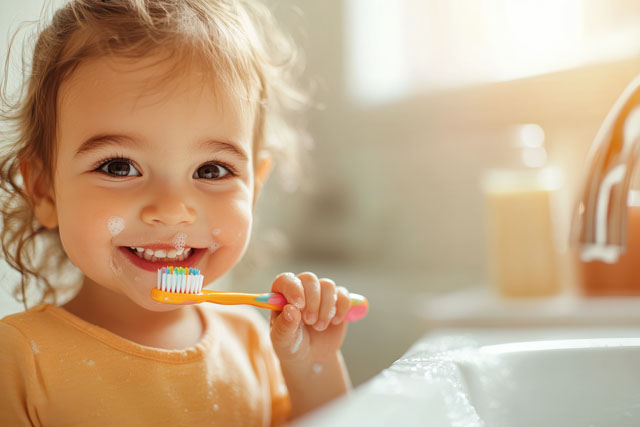
- Under Two Years: Use a rice-grain–sized smear of fluoride toothpaste. Gently brush all tooth surfaces twice daily. Even before teeth erupt, wipe gums with a soft, clean cloth after feedings.
- Ages Two to Three: Increase to a pea-sized dab of fluoride toothpaste. Stand or sit behind your child so you can see their mouth and use small, circular motions.
- Make It Fun: Sing a two-minute brushing song or play a favorite tune. Let your child pick their toothbrush (color or character) to build excitement.
- Supervise & Assist: Children don’t have the coordination to brush effectively until around age six or seven. Always finish with an adult’s thorough brush and gentle flossing once two teeth touch.
When Thumb-Sucking or Pacifier Use Becomes a Concern
- Normal Early Habit: Most infants and toddlers suck thumbs or pacifiers for comfort. It only becomes an issue if it persists past age two to four.
- Encourage Alternatives: Offer a special blanket or stuffed toy as a comfort object instead. Praise your child when they choose it over sucking.
- Gentle Reminders: At home, use positive language: “Let’s keep Sally’s thumb in the bed so her teeth can grow straight!” Avoid scolding or punishment.
- Consult Your Dentist: If your child still sucks beyond age four or if you notice teeth shifting, we can recommend habit-breaking tools or strategies that are gentle and effective.

Nutrition & Oral Health
- Balanced Meals: Include calcium-rich foods (milk, cheese, yogurt), vitamin C sources (citrus, strawberries), and crunchy veggies to strengthen enamel and gums.
- Avoid Bedtime Bottles: Never put a child to bed with a bottle of milk, formula, or juice. Overnight sipping leads to “baby bottle tooth decay.” If needed, offer plain water.
- Fluoride Is Your Friend: Ask about the right amount of fluoride for your child’s age. Fluoridated water and toothpaste help remineralize enamel and prevent cavities.